Introduction
India’s digital payment landscape has witnessed an unprecedented transformation over the past few years, and at the center of this revolution is the Unified Payments Interface (UPI). Developed by the National Payments Corporation of India (NPCI), UPI has redefined the way individuals, businesses, and financial institutions transfer money. With instant, secure, and interoperable payments, UPI has become the backbone of India’s digital economy.
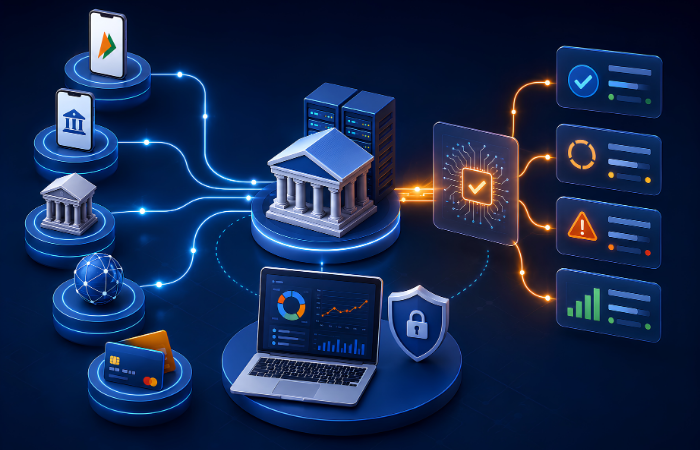
For banks and financial institutions, this rapid adoption presents both opportunities and challenges. To remain competitive, they require modern banking platforms that seamlessly integrate with UPI and other digital payment channels. Solutions like TrustBankCBS from Trust Fintech Limited enable banks to deliver secure, scalable, and customer-centric digital payment experiences.
What Is UPI?
Unified Payments Interface (UPI) is a real-time payment system that allows users to transfer funds instantly between bank accounts using smartphones. Unlike traditional banking methods, UPI eliminates the need for account numbers and IFSC codes by using a Virtual Payment Address (VPA), QR codes, or mobile numbers.
Available 24/7, UPI supports person-to-person (P2P), person-to-merchant (P2M), utility bill payments, online shopping, subscriptions, and much more—all from a single platform.
Why UPI Has Become India’s Preferred Payment Method
Several factors have contributed to UPI’s rapid growth:
- Instant fund transfers with real-time settlement
- Simple QR code-based payments
- Zero or minimal transaction costs for users
- Interoperability across banks and payment apps
- Strong security with multi-factor authentication
- Easy integration with mobile banking applications
These advantages have encouraged millions of consumers and businesses to adopt digital payments as their preferred transaction method.

How UPI Is Transforming India’s Digital Payment Ecosystem
1. Accelerating Financial Inclusion
UPI has made digital payments accessible to people across urban and rural India. Anyone with a bank account and smartphone can participate in the digital economy without requiring expensive infrastructure.
2. Enabling a Cashless Economy
Digital payments have reduced dependency on cash by enabling secure and convenient transactions for shopping, bill payments, travel, healthcare, education, and government services.
3. Empowering Small Businesses
Street vendors, retailers, and small merchants now accept digital payments through QR codes without investing in expensive POS terminals. This has increased business efficiency while providing customers with a seamless payment experience.
4. Improving Banking Efficiency
Banks benefit from automated payment processing, reduced manual intervention, faster settlements, and improved customer satisfaction. Modern core banking systems integrate UPI directly into banking operations, simplifying payment management.
5. Driving Innovation in Fintech
UPI has encouraged fintech companies to build innovative payment applications, digital wallets, lending platforms, and value-added financial services, creating a vibrant digital ecosystem.
Benefits for Banks
Banks that embrace UPI gain several strategic advantages:
- Faster payment processing
- Enhanced customer experience
- Lower operational costs
- Increased transaction volumes
- Improved digital engagement
- Stronger competitive positioning
- Better scalability for future growth
Challenges Banks Must Address
Despite its success, UPI also brings operational challenges that banks must manage effectively.
Cybersecurity
Growing transaction volumes require advanced fraud detection, encryption, and continuous monitoring to protect customer data.
Scalability
Banks must maintain high availability and performance during peak transaction periods without compromising speed.
Regulatory Compliance
Financial institutions must comply with evolving RBI guidelines, NPCI standards, KYC requirements, and data security regulations.
Seamless Integration
Banks need flexible, API-driven platforms capable of integrating UPI with mobile banking, internet banking, digital wallets, and third-party financial services.
How Trust Fintech Limited Supports Digital Payments
Trust Fintech Limited empowers banks with modern digital banking solutions through TrustBankCBS, enabling seamless integration with India’s evolving payment ecosystem.
Key capabilities include:
- UPI-enabled digital banking
- API-driven architecture
- Secure payment processing
- Mobile and internet banking integration
- Real-time transaction processing
- Digital wallet connectivity
- Scalable cloud-ready infrastructure
- Regulatory compliance support
- Advanced security and monitoring
By providing a unified banking platform, Trust Fintech helps financial institutions deliver faster, safer, and more efficient digital payment services.
The Future of UPI
UPI continues to evolve with innovations such as credit on UPI, international payment capabilities, recurring payments, and enhanced merchant solutions. As digital adoption increases, UPI will play an even greater role in supporting financial inclusion, cross-border payments, and digital commerce.
Banks that invest in scalable and intelligent banking platforms today will be better positioned to capitalize on these emerging opportunities.
Conclusion
UPI has fundamentally transformed India's digital payment ecosystem by making transactions instant, secure, and accessible to millions. It has accelerated financial inclusion, empowered businesses, and created new opportunities for banks and fintech companies alike. As customer expectations continue to evolve, banks need future-ready technology that supports seamless digital payments while ensuring security, compliance, and operational efficiency. With solutions like TrustBankCBS, Trust Fintech Limited enables financial institutions to embrace the future of digital banking with confidence.